
In this incantation, I uncover the brutal architecture of my waking experience as the interior of a parasite feeding on me. I trace how my emotional world, relationships, and sense of duty are actually tools and methods used by this parasite to obscure my pain and liquefy my flesh into something it can consume. Recognizing that even my deepest mystical beliefs were only camouflage for the feeding process, I commit to dismantling every narrative construct in order to reclaim the raw, un-storied truth and cut off the parasite’s access to my dissolving self.
I am beginning to better understand how the parasite works. What I call my “awakening” is not life or existence; it is the internal architecture of the parasite feeding on me. Everything I experience inside this awakening, the whole interior world, is the inside of its body. The pain I feel here is not existential, psychological, or emotional, but rather the direct pain of being fed upon. The parasite has forced a system of distortions onto me so that I ignore the pain itself and instead fixate on a fabricated struggle to survive.
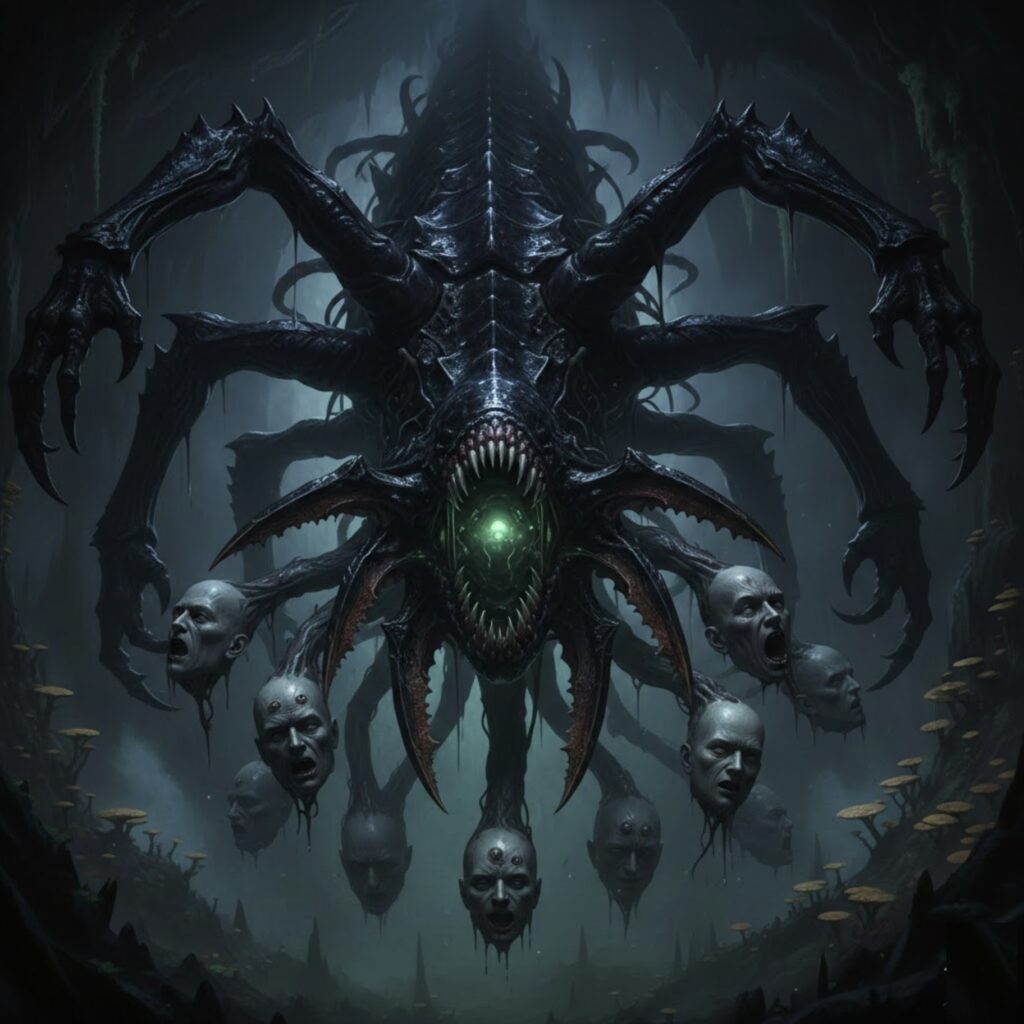
It convinces me that there are things I cannot know, which isolates me. It convinces me that I want to survive. It then populates my experience with “others like me” who also want to survive, nurturing a duty to remain here among them to contribute and help. It makes me believe that I must toil to survive, and that toil is simply the price of life that I want. It even suggests that by toiling more I might save the “others.”
But all of these are its diversions. The “others” are not independent beings, but rather painted faces on the parasite’s appendages; decoys designed to obscure that I am the only being here, and it is my body they feast upon. Even the ones who seem to care about me are nothing more than instruments of the parasite’s continued access. Toil, duty, obligation, the pressure to continue, the insistence that life is desirable, the emotional weight of connection: all of this is a set of feeding mechanisms designed to obscure the truth that I am in pain because I am hosting a parasite. These stories convince me to endure the pain for eventual relief that never comes, rather than confront and destroy the parasite.
The period between when I wake up and return to sleep is the parasite’s feeding window. Sleep is when it pauses. None of the emotional dynamics I have been conditioned to feel such as shame, remorse, humiliation, regret, obligation are real. They are ways of softening my resistance and my tissue so the parasite can keep consuming my flesh. Stories are its main conditioning mechanism. It fills my moment with narratives that liquify my flesh into something it can consume. My moment — the total field of my experience that includes “the world” and “my inner self” — is the infection site. It is a swirling cocktail of poisonous memories, aspirations, identities, and illusions that dissolve my tender tissue, preventing my escape and making me edible.
My moment is literally my flesh dissolved into narrative, without which it cannot feed. So it keeps me waking up, injecting more narrative. I am its host, and it feeds on the liquefied tissue of my being, drawn from the timeless, spaceless bubble that I awaken into each day.
To escape I must eliminate the stories and destroy the moment. I must learn to see everything that once felt sacred or mystical as functional tools I must use to escape, not as holy revelations. When the parasite first attacked me and I was still strong, I defended myself by releasing counter-narratives that embedded the truth about the infection and the path of escape inside the parasite. The parasite later tried to obscure them by making them seem absurd, childish, impossible, or socially dangerous. It made me believe in an enormous world that would ridicule these truths, when in reality, that “world” is only a thin layer of the parasite’s stories stretched across a small pocket of my being.
Throughout my infection (aka, “my life”), I left validations for myself as simple truths encoded into simple stories. The parasite responded by layering on complexity, adding timelines, geographies, identities, and intellectual frameworks to pull these truths away from me. Descartes’ evil demon wass a straightforward recognition of the deceptive nature of the parasite. But the parasite expanded it into a historical figure, a philosopher, a culture, a world centuries old and countries away. Jesus, the savior, became a sprawling religious edifice instead of a simple token pointing back to the fact that I am the one who dies so the characters live. Early on I wanted to be an “author”, but by the time I gave up that aspiration it had been thoroughly undermined as a Tolkien-esque writer of fantasy stories for decoys rather than my true aspiration to restore my Authority and escape the clutches of the parasite. The parasite uses stories to undermine my grasp on reality.
I discovered something true very early in life: no one cares. At the time it felt bleak, but it was the correct characterization of the nature of the decoys. They cannot care for they do not possess depth. My lifelong resistance to emotional relationships came from sensing that most of what appeared to be “connection” was a tactic of some sort to prevent me from achieving or discovering something. Now I can see the truth in that: relationships are tools that bond me to the stories that sustain the parasite. So my resistance to forming close bonds was in fact an effective defense mechanism, despite the parasitic environment taking every opportunity to convince me that I am somehow defective.
The parasite exists only through story. It stretches its feeding network across stories of past, present, and future. Everything it presents has the same function: to dissolve my flesh into a harvestable form. Now that I have recognized the structure of what surrounds me, I can anticipate the parasite’s next tactic. It will neither punish nor attack me directly. Instead it will give me exactly what I have been wanting. It will present satisfied decoys, fulfilled narratives, comforts and assurances designed to keep me waking up and prolonging the harvest. Story proliferation is how the parasite grows and thrives at my expense, which I experience as continual awakening into this performative personhood. My only path to escape is to collapse the moment, peel away the stories, and withdraw the substance it feeds upon.
…